
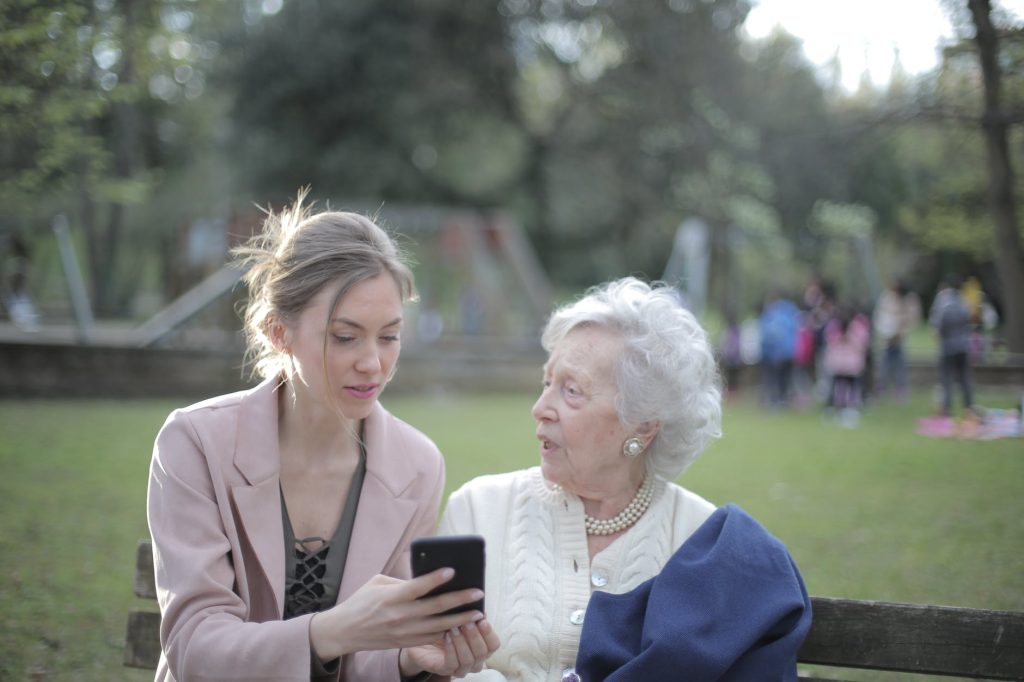
Over the last few weeks, I have spent some time with my elderly parents, and one of the most noticeable aspects of their lives is how distant and estranged they are from modern life.
They just don’t understand it.
Now I accept that every generation will, at times, incomprehensively shake its head at subsequent generations. I even remember doing it myself when trying to make sense of my daughter’s latest music craze. I wince when I recall the number of times I shouted up the stairs to her, “Turn that noise down!”
My parents would have shouted at me similarly during my rebellious teenage years.
But the estrangement that I refer to now is not in relation to taste or fashion but to the way life is being led, to the way that society is progressing.
Society and life are being driven by technology. And it is transforming the world at an ever-increasing pace.
Think how technology has changed over the last twenty or thirty years; think how our lives have changed over the last twenty or thirty years. Now think how things might change over the next twenty or thirty years.
The change is dramatic; the rate of change is dramatic. It’s no surprise that some people may struggle to adjust to it.
The technologies that are most concerning are those that impact people’s day-to-day lives; those unavoidable technologies; those needed for basic activities – paying bills, getting around, communicating with others, and shopping.
If a person’s inability to use a piece of technology prevents them from doing essential everyday activities, how must that make them feel?
There are people who lack computer skills, people who don’t have or who aren’t familiar with a smartphone, and people who don’t understand the latest technological terminology.
What are they supposed to do? How can people be expected to cope with life if they don’t understand it or don’t know how things work?
Just as there can be a financial divide between those who have and those who have not, there can also be a technological divide between those who can and those who cannot.
We all recognise the problems caused by the financial disparities between people. In fact, a great deal of government activity is devoted to alleviating some of the hardships and deprivations that arise from such financial disparity.
Technology generates similar disparities. It can thereby create a divided society.
Those who can’t embrace and utilise the new technology can be driven to the margins of society. They may become increasingly isolated, their voices unheard. Just as the financial “haves” are the influencers and drivers of society, as we progress, the technological “cans” will become the new dynamic force.
And just as financial success tends to lead to more financial success, technological progress will tend to lead to more technological progress.
Driven by a desire to save on costs, a belief that organisations need to be streamlined, and the view that technology equates to progress, we will embrace the new technological order and strive to advance its influence.
And yet, this may not necessarily be for the best. Too often, we can focus on the business application and the efficiencies that new technology can bring. We can overlook the broader impact on how people live. Our perspective can too easily become one-sided.
Instead, we need to recognise how those technological changes are affecting people’s lives. We need to ask ourselves whether this new technology is beneficial to them or adds new, perhaps unnecessary, complications and difficulties to their lives.
As our working population becomes younger, there is a danger that they may assume their tech-savvy skills are more widespread than they really are. They might be used to the technology; they may have grown up with it; they may see it as an everyday part of their lives, but for many people, it may not be.
It is this presumption that could lead to the alienation of great swathes of our population, particularly amongst the elderly. Such alienation must be avoided. It makes it difficult for people to engage with society and those around them, to feel valued as part of society, and to feel that they make some contribution to it.
An alienated population is one that is divided, discordant, and detached.
That’s why it is important that we be aware of the dangers technology can pose.
How do we avoid this technological impact? How do we prevent technology from running away with itself? How do we curb its insatiable, expansionist tendencies?
Frankly, technological progress is inescapable. Not only does it help to save lives, to give us more control over our lives and to enable us to do things that we were never able to do but the reality of our world is that if we don’t technologically advance then somebody else will and in a competitive world environment our survival and positioning in that world is dependent on us keeping pace with change. We just can’t be left behind.
The only answer is to make sure that we are particularly careful to ensure our technological advances are considered in relation to those who don’t naturally embrace the technology.
We need to ensure that technological advances are as inclusive as possible. That means:
- A proper introduction and training to new developments.
- New technologies are gradually phased in.
- We minimise unnecessary complications.
- We are constantly mindful of the less technologically advanced in our society and their ability to understand, access, and use new developments.
I make this appeal because I am already aware that technology is getting away from me. There are things that I don’t understand, technologies that younger people seem to be much more at ease with, advances that I can’t seem to see the value or need for.
I don’t want to experience the detachment and alienation from society that my parents seem to have, but then nor do I want to spend my life in a relentless effort to try to keep up with technological change – an effort that I know will undoubtedly prove futile.
We should remember that technology exists to improve people’s lives, not to prevent them from living their lives.
 Oxthink
Leave a comment