
Getting the best start in life is about having a good education… wrong.
Getting the best start in life is about being offered opportunities to utilise and develop potential… wrong.
Getting the best start in life is about being in a supportive and nurturing family environment… wrong.
These facets may all be beneficial, but they are aspects of child rearing that are arguably not the foundations for getting the best start in life. That happens before any of these come into play.
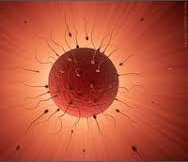
The start of life is at conception. A couple’s first responsibility as parents, therefore, does not occur at the baby’s birth or during the pregnancy, but in their actions prior to conception. It is through both the man’s and woman’s behaviour and lifestyle that the raw materials which will produce their baby are created. The quality of the egg and that of the fertilising sperm are determined by the body that creates and holds them. If those bodies have been neglected or mistreated, damaged or tainted, then they will not generate the best possible reproductive material, which will mean that the embryo they go on to produce may not be all that it might have been.
It is not that different from cooking. Most chefs will advise that the key to a good meal is to use the best quality ingredients available. Whenever we produce something, the output will only be as good as the quality of the inputs used. Of course, having a good chef will always help, but if the ingredients are of a premium quality, then it will certainly add to the result.
Is a woman’s ovarian egg really very different from the egg of a chicken? Not greatly. And yet, we recognise organic and free-range eggs as being of a much better quality – they taste better, they’re better for us, and we get a better product when we cook with them. And, because of this, we’re prepared to pay more for them.
Generally, women will stop smoking and drinking alcohol when they find out that they are expecting. They will become more conscious of what they are doing to their body. But in part, the damage will already have been done. The embryo is already created, and the building blocks are already in place.
As for men, very few have any realisation that the quality of their sperm is determined by the inputs that go into their bodies.
Too many parents-to-be, particularly the young, conceive accidentally. They may have smoked, taken drugs, eaten poorly, and drank alcohol right up to and through conception. Only when they later become aware of the pregnancy will they perhaps change their behaviour. By then, it is of course too late.
As an athlete’s training builds toward a main event, prospective parents should also prepare for their moment of conception. Their bodies need to be in top condition – pure and unsullied. It’s the surest way to achieve the best outcome. If they’re not in tip-top condition, then they’re not going to deliver the best possible result. And genetically, it’s all about maximising potential.
By this definition, therefore, accidental conception must be of a poorer quality than one that is planned and prepared for. This is not to say that the resulting baby will be inferior; it may just not be all that it might have been.
But where do we draw the line? Cutting out cigarettes and alcohol prior to conception is a fairly obvious behaviour that would be beneficial, but how far should we go?
Should we be eating organically?
Should we cut out all but essential medications?
Should we avoid heavily polluted areas?
Should we be taking vitamins or supplements to improve our body’s chemistry?
Should we follow an exercise programme to get pre-conceptually fit?
These are all pieces of advice and recommendations that may be given during pregnancy, but they may also apply equally during pre-conception.
Too often, we focus on lifestyle changes to improve the chances of conception, but we should also be making lifestyle enhancements to improve the quality of the conception itself.
Although, in general, we may recognise that the quality of outcomes is, more often than not, governed by the quality of the inputs, in relation to conception, this is rarely acknowledged. This is because we like to uphold the mantra that parents will always do their best for their children. Yet, by challenging their pre-conceptual behaviour, we are suggesting that perhaps they haven’t done their best, that perhaps they have fallen short of being a good parent.
The implicit suggestion is that all unplanned – and therefore unprepared for – pregnancies are of poorer quality. It’s an assertion that would not sit comfortably with many parents.
As we all know, there is no such thing as perfect parenting. We will be parents for many years. In that time, we are bound to do things wrong. We all make mistakes, have deficiencies or do things that, for whatever reason, might not be in our child’s best interests. Perhaps poor conceptual preparation is just one of those failings.
In the grand scheme of things, it might also be asked how important the conceptual moment is. Does it really matter if that child is later brought up in a loving, nurturing environment that is committed to maximising that child’s best potential and interests? It’s certainly true that later failures and successes may negate or compensate for pre-conceptual preparations; nevertheless, it is only by doing those preparations that we seek to give our child the best possible start in life.
***
For more thoughts, go to the Oxthink Home page or check out the different sections on Health and Well-being, Lifestyle Choices, Parenting Advice, Understanding Society and General pages.
Alternatively, for articles on genetics and evolution, visit this author’s dedicated site at Genetically Wrapped.
Leave a Reply